5 Verified Studios for a Compliant Canadian Passport Photo in the UK
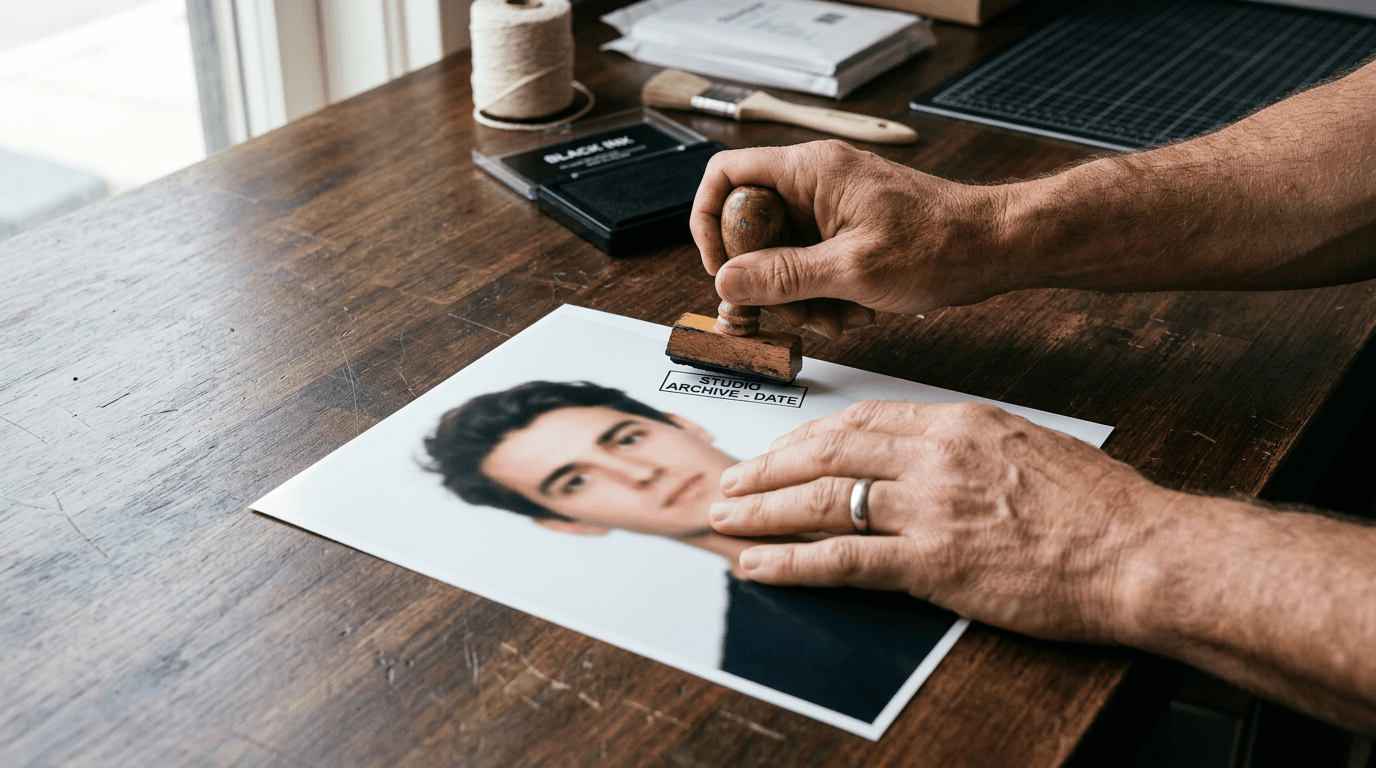
The most common failure mode for expatriates and dual citizens renewing their documentation is walking into a standard high-street booth, sitting for a standard UK biometric crop, and submitting that print to Ottawa. Canada does not use the European 35x45mm standard; they require a stringent 50x70mm physical print, with the subject's face measuring exactly between 31mm and 36mm from chin to crown. More critically, the application demands a physical studio stamp on the reverse side detailing the photographer's name, address, and the date the image was captured. Obtaining a valid canadian passport photo requires finding a physical studio that understands this specific biometric geometry, possesses the correct manual cutting equipment, and has the rubber stamp ready on the counter.
Quick Summary
Obtaining a compliant Canadian passport photo in the UK requires bypassing automated photo booths in favour of human-operated studios capable of producing 50x70mm prints. Because the Canadian High Commission enforces stringent dimensional and rear-stamping mandates, applicants must select a vendor with specific experience in North American biometric formats to avoid immediate application rejection.
- Standard UK booth photos will be rejected by Canadian authorities due to incorrect sizing.
- The requirement demands a physical 50x70mm print with an endorsed rear stamp.
- Only staffed studios can provide the required studio details and date endorsement.
- Digital applications have separate, equally strict pixel and lighting constraints.
Table of Contents
- Why a Canadian Passport Photo Breaks Standard UK Setups
- Choosing the Right Studio Model
- 1. Reload Internet
- 2. Kodak Express Highgate
- 3. Stuart Cameras
- 4. The Passport Photographer
- 5. Jefferson Studios
- Matching Your Situation to the Right Studio
- Recommended Reads
Why a Canadian Passport Photo Breaks Standard UK Setups
Automated UK photo kiosks are programmed strictly for the HM Passport Office criteria. They crop aggressively, output a 35x45mm grid, and generate a digital code. None of these outputs meet the physical, dimensional, or administrative requirements of a Canadian application. The studios evaluated below maintain the specific hardware and knowledge required to bridge this gap.

| Studio | Studio Model | Features | Pros | Cons | Target Audience |
|---|---|---|---|---|---|
| Reload Internet | High-Volume Passport Hub | Manual cropping, dye-sublimation printing, physical stamp | Rapid turnaround, no appointment needed, transit-accessible | High footfall environment, rushed atmosphere, limited privacy | Applicants needing urgent processing near central London transit |
| Kodak Express Highgate | Hybrid Retail Lab | Studio lighting, retail biometric software, manual guillotine | Walk-in service, ancillary print services, neutral backdrops | Split staff attention, potential retail queues, varied lighting | North London residents combining document prep with errands |
| Stuart Cameras | Hybrid Retail Lab | DSLR capture, metered lighting, strict scaling tolerances | High technical precision, robust lighting control, experienced technicians | Dictated by retail hours, limited space, counter-based service | Applicants who have suffered previous rejections due to shadows |
| The Passport Photographer | Specialist Portrait Studio | Dedicated time slots, controlled strobes, individualised pacing | Calm environment, precise lighting, excellent for anxious subjects | Requires advance booking, higher base cost, no walk-ins | Those requiring a quiet environment or complex infant shots |
| Jefferson Studios | Specialist Portrait Studio | Full studio floor, overhead capture capability, digital pre-flight | Ideal for newborns, extensive physical space, rigorous verification | Premium pricing, appointment mandatory, overkill for standard adult renewals | Parents of newborns needing flat-lay biometric captures |
Choosing the Right Studio Model
Before selecting a location, it is critical to understand the operational model of the studio. The Studio Model classification lens separates these businesses by how they balance biometric ID work against other commercial activities.
High-Volume Passport Hubs focus entirely on rapid, walk-in turnarounds for international IDs. Their workflows are built for speed, making them ideal for urgent consular appointments but potentially overwhelming for families.
Hybrid Retail Labs combine standard photo printing and camera sales with ID services. They offer convenience and walk-in availability, though ID applicants must share the counter with retail shoppers.
Specialist Portrait Studios operate on an appointment-only basis. They use full-scale portrait lighting and dedicated physical spaces, offering the calmest environment for capturing complex subjects at the cost of immediate availability.
Practical rule: Do not commit to a studio visit unless they explicitly confirm over the phone that they possess a physical rubber stamp for the back of the print; a handwritten studio address is frequently flagged and rejected by Canadian consular staff.
Consulting comprehensive UK & International Baby Passport Photo Requirements & Guides before you travel to the studio ensures you know exactly which dimensions to request when you arrive at the counter.
1. Reload Internet
"Do I need an appointment, or can I just walk in with my paperwork?" is the primary filter for applicants attempting to secure compliant ID prints during a lunch break in central London. Reload Internet operates as a dedicated passport, visa, and ID photograph studio located in Paddington, London, structuring its entire daily workflow around international document compliance.
Staff bypass pre-set automated booth software entirely. They capture the image against a neutral screen. Next, they manually scale the raw file on a dedicated workstation. The operator aligns the subject's chin and crown precisely within Canada's strict 31-36mm vertical tolerance. They format the output onto a custom 50x70mm digital template. This file is pushed to a commercial dye-sublimation printer. It bonds the ink to the paper instantly. This prevents smudging when the mandatory studio stamp is immediately applied to the reverse of the photograph.
Dedicated ID workflows eliminate measurement guesswork
Because this is a High-Volume Passport Hub, the operational pace is aggressively streamlined. The mechanism relies on repetition; the staff process North American ID formats daily, meaning they do not need to look up the specifications before taking the shot. The physical stamp, which includes the required date of capture and studio address, is permanently stationed at the till.
Where this facility struggles is in its atmosphere. Because it operates purely on volume and rapid turnaround within a busy metropolitan transit hub, the environment is loud and crowded. Applicants attempting to capture compliant images of highly uncooperative toddlers may find the rushed, high-footfall setting overwhelming compared to a quiet, private space.
I would head straight to this location if you have a tight deadline for a consular application and need guaranteed prints processed immediately near central transport links.
Pros
- No appointment required for immediate processing
- Staff are highly practiced with North American ID formats
- Immediate application of the required physical stamp
Cons
- High-stress, crowded retail environment
- Limited patience or privacy for difficult infant shots
- Aesthetic considerations are entirely secondary to speed
2. Kodak Express Highgate
Discovering that a standard booth code fails to meet Canadian criteria sends many North London residents scrambling for a staffed photographic counter. Kodak Express Highgate serves as a professional printing and passport photo studio based in Highgate, North London. It operates as a Hybrid Retail Lab, mixing everyday photo printing services, film development, and framing with specialised international ID work.
The operator combines a traditional studio lighting setup with a neutral physical backdrop to capture the initial image. The raw file enters Kodak's proprietary retail biometric software. Automated crops often default to the European standard. Rather than relying purely on this, the technician manually overrides the overlay. This matches the exact dimensions required for a canada passport photo. Once printed on traditional photographic paper, staff use a heavy-duty manual guillotine. They trim the print exactly to 50x70mm. This ensures sharp and clean edges before applying the rear stamp.
Retail integration means broader printing support
This hybrid approach means the studio can leverage professional lighting while maintaining the accessible, walk-in nature of a high-street shop. The use of actual strobes rather than a flat flash helps eliminate the micro-shadows around the ears and neck that frequently trigger automated rejections at the High Commission.
The structural limit of this setup is divided staff attention. Because the photographer is also managing standard printing customers, film drop-offs, and till transactions, their focus is frequently split. During peak weekend hours, this dual mandate can lead to frustrating queues and a feeling of being rushed through the biometric capture process.
Choose this lab when you need compliant international ID prints but also need to handle other photographic printing or framing errands in a single trip.
Pros
- Utilises proper studio lighting to eliminate shadows
- Precise manual guillotining of the final physical prints
- Convenient walk-in availability on the high street
Cons
- Staff attention is divided by general retail duties
- Peak hours frequently result in long waiting times
- The capture space is somewhat exposed to the main shop floor
3. Stuart Cameras
With a Trustpilot TrustScore of 4.5 out of 5 based on 27 reviews, this venue demonstrates that dedicated camera expertise often translates into precise compliance work. Situated in Whitechapel, London, Stuart Cameras is a long-standing photographic printing and camera shop offering passport photo services alongside professional hardware sales.
The technicians here approach ID photography with the exact technical rigour they apply to portraiture. Operating as a Hybrid Retail Lab, they capture images using professional-grade DSLR bodies paired with portrait lenses, rather than the wide-angle webcams common in high-volume hubs. By carefully managing the sensor's depth of field, they ensure that both the tip of the nose and the back of the ears remain in razor-sharp focus - a strict requirement for a passport size photo canada. The metered lighting setup eliminates background shadows, and the file is meticulously scaled on a calibrated monitor before printing and stamping.
Camera expertise translates to superior lighting control
When a studio understands exposure triangles and focal lengths, the resulting image is vastly superior in clarity. This technical grounding prevents the grainy, poorly lit outputs that plague automated kiosks. If a prior application was rejected due to lighting inconsistencies, verifying exactly how a new studio handles exposure through a dedicated Help Center or pre-visit consultation clarifies what you are paying for.
As a business primarily oriented around photographic equipment sales and professional film processing, their opening hours and counter availability are strictly dictated by retail footfall rather than applicant emergencies. They do not open early or stay late for last-minute consular panics, and the physical space dedicated to the biometric capture is tightly constrained within a shop packed with expensive inventory.
I would rely on this shop if you have experienced previous photo rejections due to lighting, glare, or shadow issues and require a technician who truly understands photographic exposure.
Pros
- Exceptional control over depth of field and focus
- High-end DSLR capture yields excellent print clarity
- Metered lighting eliminates background shadow rejections
Cons
- Strict adherence to standard retail operating hours
- Capture area is cramped within a busy hardware shop
- Counter service is not prioritised over equipment sales
4. The Passport Photographer
While high-street camera shops balance retail traffic with ID services, this operation focuses entirely on the intersection of formal portraiture and biometric precision. Operating in Bath, The Passport Photographer is a professional passport, visa, and portrait photography specialist that firmly steps away from the volume-driven walk-in model.
This business functions as a Specialist Portrait Studio. The photographer requires dedicated, booked time slots, allowing for a strictly controlled, private environment. Lighting is fine-tuned to the individual's facial structure using large, diffused strobes rather than direct flash. This unhurried pace is critical for ensuring compliance with passport photo requirements, as it allows the technician time to coax a truly neutral expression from the subject without harsh glare reflecting off the skin or glasses. The prints are then processed, measured, trimmed, and stamped in a calm, focused workflow.
Controlled environments yield higher first-time acceptance
The primary advantage of this mechanism is stress reduction. By eliminating the queue of impatient retail customers behind the applicant, the photographer can take multiple exposures until the biometric geometry is perfect. Finding a studio with a clear 100% Refund Policy on biometric rejections is easier in this tier, as the precision of a controlled environment dramatically lowers the failure rate.
The requirement to book dedicated time slots means this is simply not a viable option for last-minute panic processing. If you discover a missing document the morning before a scheduled visa appointment, this studio's structured diary cannot accommodate you. Furthermore, the base cost for a private sitting reflects the dedicated time, making it significantly more expensive than a high-street counter.
This is the ideal booking for those who find standard ID photography stressful or who require a quiet, unhurried environment to capture compliant prints.
Pros
- Private, unhurried environment reduces subject anxiety
- Highly diffused strobes prevent skin glare and shadows
- Dedicated time ensures perfect biometric alignment
Cons
- Mandatory advance booking eliminates walk-in flexibility
- Premium pricing reflects the dedicated studio time
- Not suitable for urgent, same-day consular deadlines
5. Jefferson Studios
Capturing a flat, shadow-free image of an infant requires lowering the camera angle, bouncing the flash off the ceiling, and diffusing the direct light - a sequence rarely accommodated in high-street booths. Jefferson Studios is an independent, south Bristol-based photography studio that leverages its expansive professional infrastructure to produce compliant documentation for difficult subjects.

Operating firmly as a Specialist Portrait Studio, the facility uses a full studio floor. For infants and newborns, the technicians physically reconfigure the space, safely laying the child flat on a compliant white background and capturing the image directly from above. This overhead mechanism allows gravity to help the infant maintain a neutral, forward-facing expression. Post-capture, the technicians manage the strict Canadian biometric tolerances by applying digital verification overlays in professional editing software before outputting the final 50x70mm prints and applying the manual studio stamp.
Physical studio space accommodates complex captures
Having the physical footprint to move lights, stands, and subjects changes the entire nature of the biometric capture. Before attending a complex sitting, reviewing a studio's Privacy Policy ensures you understand how they handle and store the raw digital files of minors after the physical prints are handed over.
Practical rule: When photographing infants for international documents, never accept an image where the parent's hands, arms, or clothing are visible in the frame; it will be automatically rejected by the reviewing officer.
Operating a large independent portrait studio involves substantial commercial overheads. Consequently, their single-service ID pricing is inherently less competitive than that of automated kiosks or dedicated high-volume hubs. Booking a full studio space just for a standard adult renewal often feels like an over-investment of both time and money.
I would reserve this studio specifically for complex cases, such as newborn documentation, where physical space, specialised setups, and deep patience are far more valuable than speed.
Pros
- Overhead setups perfectly suited for newborn captures
- Spacious environment accommodates prams and families
- Rigorous digital pre-flight checks before printing
Cons
- Considerably more expensive than high-street alternatives
- Requires scheduled appointments well in advance
- Excessive infrastructure for a simple adult ID renewal
Matching Your Situation to the Right Studio
Choosing where to spend your money depends entirely on the urgency of your application and the complexity of the subject.
If you are racing against a tight consular deadline, a High-Volume Passport Hub is the correct route. These venues trade atmosphere for sheer speed, ensuring you can walk in, have your face measured against Canadian tolerances, and walk out with a stamped 50x70mm print in minutes.
When your schedule is more flexible and you prefer to handle multiple tasks in one trip, a Hybrid Retail Lab offers the best balance. You benefit from professional manual cropping and guillotine trimming, while retaining the convenience of a walk-in high-street location, provided you can tolerate the occasional retail queue.
For applicants dealing with complex requirements - such as anxious subjects, infants who cannot support their own heads, or a history of lighting-based rejections - a Specialist Portrait Studio is the only logical choice. The ability to book a private space, utilise highly diffused lighting, and shoot overhead transforms a stressful requirement into a predictable outcome.