Asian Visa Guidelines: Preparing the Correct Hong Kong Passport Size Photo
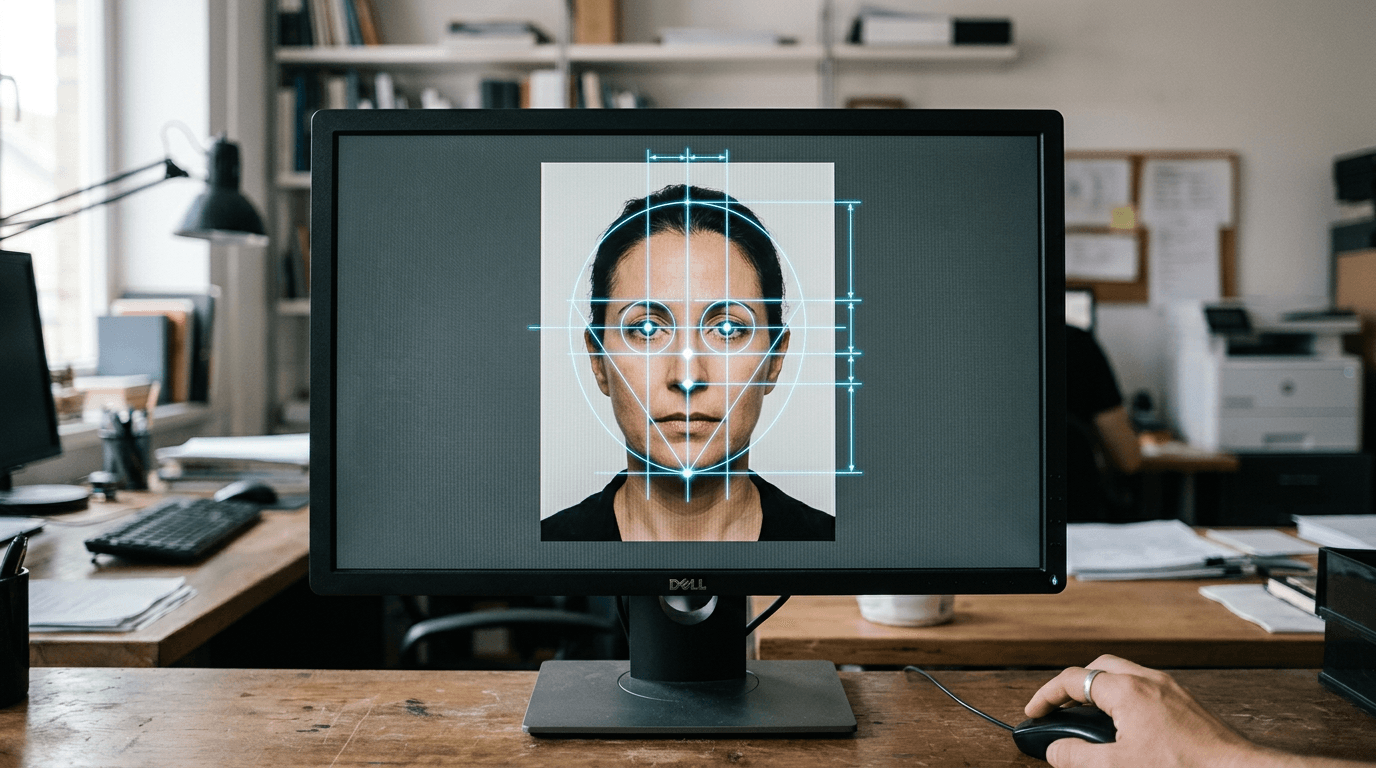
You finish the visa application, remit the non-refundable processing fee, and log out of the consulate portal. Three days later, the automated system returns a generic error code: your biometric scan has been rejected. The reality of securing travel documentation for major Asian jurisdictions is that border authorities do not manually review your portrait; their algorithmic systems merely measure the pixel distances between your pupils, the crown of your head, and the margin of the crop.
A compliant Hong Kong passport size photo operates on completely different geometric rules than the standard format used in the United Kingdom. Submitting a British crop to a Malaysian or Bangladeshi immigration portal guarantees administrative erasure and costly delays. This guide dismantles the exact biometric thresholds for these three distinct jurisdictions, detailing the specific chromatic and geometric limits you must satisfy to clear the automated checks on your first attempt.
Quick Summary
Navigating the distinct documentary standards for Hong Kong, Bangladesh, and Malaysia requires abandoning standard European photographic templates and adhering strictly to each jurisdiction's specific biometric matrix. The primary point of failure is rarely the outer paper dimension, but rather the internal facial proportions and textile contrast rules mandated by consulate software.
- Hong Kong mandates a 40x50mm frame containing a prominent chin-to-crown ratio, placed against a plain white background.
- The Bangladesh passport photo size requires a larger 45x55mm crop to capture a wider chest proportion within the frame.
- The Malaysia passport photo size enforces narrow 35x50mm dimensions and strictly demands that the applicant wears dark clothing for edge contrast.
Table of Contents
- Why a Hong Kong passport size photo fails standard scanning logic
- How the Bangladesh passport photo size triggers margin compression errors
- Why the Malaysia passport photo size enforces strict textile contrast rules
- What biometric border scanners actually measure
- Where identical applicant portraits fail distinct biometric grids
- Why processing infants breaks standard validation thresholds
- Comparison Table: Specifications by Jurisdiction
- FAQ
- Recommended Reads
Why a Hong Kong passport size photo fails standard scanning logic
The Hong Kong Special Administrative Region (HKSAR) deploys highly rigid facial recognition architecture. The physical requirement is a strict 40x50mm outer frame. If you attempt to present a standard UK 35x45mm print, the automated cropping parameters immediately reject the submission.
The real complexity lies inside those margins. Within that 40x50mm block, the applicant's head - measured precisely from the chin to the physical crown of the head, ignoring hairstyles - must occupy between 32mm and 36mm. This forces the face to dominate the frame, leaving very little headroom or torso visible. It is a highly zoomed-in orientation.
Historically, Hong Kong accepted both plain white and plain blue backgrounds. However, current digital submission gateways for adult and infant passports heavily optimise for a pure white backdrop. The consulate's software is designed to establish an absolute separation between the subject's hair and the background. If the lighting drops off towards the edges of the 40x50mm frame, the software registers the shadow as part of your head contour, enlarging the detected head size beyond the 36mm maximum and triggering an immediate rejection. Consulting an established UK & International Baby Passport Photo Requirements & Guides framework before you finalise the file prevents these internal geometry failures.
How the Bangladesh passport photo size triggers margin compression errors
The digital e-passport and Machine Readable Passport (MRP) systems operated by the Government of Bangladesh function on a fundamentally different aspect ratio. The primary Bangladesh passport photo size is 45x55mm.
This 45x55mm dimension is notably wider and taller than most international standards. The system expects to see not just the head and neck, but the tops of both shoulders settling comfortably into the bottom corners of the frame. The facial structure itself should measure approximately 34mm to 39mm from chin to crown. The most frequent error applicants make is taking a tight facial crop and stretching the digital canvas to reach 45x55mm. This enlarges the head to 42mm, instantly failing the proportion check.
The background must be completely white without any borders, frames, or harsh drop shadows. In physical print submissions, the paper must be matte to avoid scanner glare. For digital uploads, utilising a compliant UK Baby Passport Photo Maker forces the crop to maintain exactly 45x55mm while preserving the necessary peripheral space around the shoulders, ensuring the biometric template has enough peripheral data to establish depth and scale.
Why the Malaysia passport photo size enforces strict textile contrast rules
Malaysian immigration authorities dictate a 35x50mm format. This creates an unusually tall and narrow profile, giving the image a distinct vertical orientation. However, the exact dimensions are secondary to Malaysia's most unforgiving rule: textile contrast.
The background for a Malaysian submission must be pure, unbroken white. Crucially, the applicant must wear dark clothing that covers the shoulders and chest. A black, navy, or dark brown shirt is mandatory without exception. If you wear a white shirt against a white background, the facial extraction algorithm cannot identify where your shoulders begin or end. Instead of seeing a torso supporting a head, the software reads a 'floating head' and instantly terminates the scan.
Practical rule: Avoid patterned shirts or subtle pastels for Malaysian documents entirely; a solid black or dark navy top clears the edge-detection algorithm significantly faster than any other option.
What biometric border scanners actually measure
When you upload a digital image file to an embassy portal, it is not placed into a queue for human viewing. It is routed through a validation engine based heavily on ISO/IEC 19794-5 standards.

The software converts the colour photograph into a high-contrast monochromatic map. It drops anchor points on the centre of your left pupil, the centre of your right pupil, explicitly measuring the distance between them. It then maps the lowest pixel of your chin, the apex of your skull, and the extreme edges of your jaw. It evaluates the space between these anchor points as ratios. If the Malaysian consulate requires the head to occupy a strict proportion of the vertical height, and your pupil-to-chin distance mathematically pushes the head height past the allowed limit, the algorithm returns a failure. It does not matter if the picture is perfectly lit or deeply focused; if the internal percentage matrix fails, the application is stalled.
Where identical applicant portraits fail distinct biometric grids
The most common failure across Asian consulate platforms is the generic "Biometric Data Rejected" error. This automated alert rarely specifies which internal parameter failed the scan. From the outside, the submitted photograph appears perfectly sharp, centred, and well-lit to the naked eye.
In reality, this generic firewall error splits into four distinct geometric and chromatic failures that require completely different adjustments to correct. The most frequent culprit overall is background gradient bleeding caused by uneven ambient lighting. To identify which specific failure is actively triggering the rejection of your application, use the following diagnostic matrices.
Background gradient bleeding
This occurs when the white wall behind you is not lit independently. The camera exposes for the subject's face, leaving the background increasingly grey or murky at the outer edges of the photograph. The scanner software reads this dark grey edge as an object intruding into the frame.
Symptom check questions to isolate gradient bleeding:
- Do the bottom corners of the background appear slightly cooler or darker in tone than the white space immediately behind the applicant's ears?
- Does sampling the background colour in any standard image editor yield a grey hex value at the borders rather than pure white?
- Is there a faint, diffused drop-shadow visible anywhere along the jawline or neck that mimics a solid contour?
Shoulder-line assimilation
This is the primary reason Malaysian visas fail. The software attempts to draw a bounding box around the human figure. When the luminance of the clothing roughly matches the luminance of the backdrop, the bounding box fails to close, causing a textile validation collapse.
Symptom check questions to isolate shoulder-line assimilation:
- Does the applicant's clothing share the same general brightness value as the background?
- When observing the photo as a small thumbnail, does the subject appear detached from a torso?
- Are the outer shoulders clearly visible, or does the applicant's light-coloured collar blend directly into the background margin?
Pupillary distance skewing
This failure happens frequently with the Bangladesh 45x55mm format when the applicant zooms the camera too forcefully. The algorithm requires empty "air" around the head to measure where the facial margins exist. Cropping too tight deletes this required dead space.
Symptom check questions to isolate pupillary skewing:
- Is the distance from the top of the applicant's hair to the upper edge of the photo less than a few millimetres?
- Does the chin rest almost completely on the bottom edge of the digital canvas, dominating the entire lower quadrant?
- Do the ears breach the vertical side margins of the defined rectangular threshold?
Infant somatic artifacting
When parents submit photos of babies under twelve months, the physical inability of the infant to sit unsupported creates scanning artifacts. The border software detects extra limbs, fabric folds, or bizarre angles and rejects the file for containing multiple human subjects.
Symptom check questions to isolate somatic artifacting:
- Are the fingers of a parent faintly visible supporting the infant's neck or shoulders beneath their shirt?
- Does the white sheet or blanket beneath the infant display highly prominent creases, harsh lighting ridges, or fabric folds?
- Is the infant looking slightly off-axis rather than maintaining direct optical alignment with the camera lens?
Why processing infants breaks standard validation thresholds
Applying these highly rigid geometric rules to a newborn baby is an exercise in managing deliberate compromises. Infants cannot comfortably support their own heads, making the strict chin-to-crown verticality demanded by Hong Kong and Malaysia difficult to capture.
For Hong Kong and Malaysian applications, consulates generally recognise that achieving a perfectly neutral facial expression - closing the mouth and fully opening the eyes - is entirely unrealistic for applicants under one year of age. Slight variations in facial expression are tolerated. However, the background and margin rules remain absolute. Placing an infant safely on a plain white sheet on the floor allows you to shoot from directly above, securing the correct aspect ratio without holding them.
Practical rule: Ensure that you pull the sheet taut from all four corners before placing the infant down; heavy wrinkles cast micro-shadows that biometric software misidentifies as secondary faces or objects in the background.
The challenge is guaranteeing that these structural compromises will clear the automated portal. Because manual consulate adjudication is increasingly rare, choosing a provider whose underlying software verifies the output against these exact Asian databases, offering a steadfast 100% Refund Policy, transfers the regulatory and financial risk away from the parent entirely. Additionally, before uploading family biometrics to any online architecture, it is essential to verify the data retention standard in the respective Privacy Policy to ensure infant data is deleted immediately upon final render.
Comparison Table: Specifications by Jurisdiction
| Jurisdiction | Outer Dimensions | Chin to Crown Ratio | Background Colour | Critical Clothing Requirement |
|---|---|---|---|---|
| Hong Kong | 40mm x 50mm | 32mm - 36mm | Plain White / Blue | Unrestricted, avoid background match |
| Bangladesh | 45mm x 55mm | 34mm - 39mm | Pure White | Unrestricted, standard contrast |
| Malaysia | 35mm x 50mm | ~25mm - 30mm | Pure White | Mandatory dark clothing over shoulders |
FAQ
Can I wear glasses in my photograph for these Asian jurisdictions?
The baseline rule for Hong Kong, Bangladesh, and Malaysia is to remove all spectacles. Even if the frames do not obscure the pupil, any minor glare off the glass surface corrupts the biometric eye scan and results in an automatic system rejection.
Does a standard UK photo booth produce compliant pictures for these countries?
No. A standard booth situated in a UK supermarket or retail store is hardcoded to output at 35x45mm against a grey or off-white background. This fails both the outer dimension checks for Hong Kong (40x50mm) and Bangladesh (45x55mm), and routine Malaysian background contrast specifications.
Why exactly is dark clothing necessary for Malaysian passports?
Malaysian border control hardware expects high visual tension between the subject and the mandated pure white background. Dark clothing gives the algorithm a defined edge to map where the torso ends and empty space begins. White or extremely light pastel shirts blend into the background, breaking the algorithm's edge detection logic.
Are pacifiers or headbands acceptable in infant submissions?
None of these jurisdictions permit pacifiers, large decorative bows, ribbed hats, or oversized headbands. The face, encompassing the entire forehead down to the chin, and both edges of the face contour, must be completely visible and perfectly exposed without shadows cast by external items.