Navigating German passport photo requirements: Rules for 2026
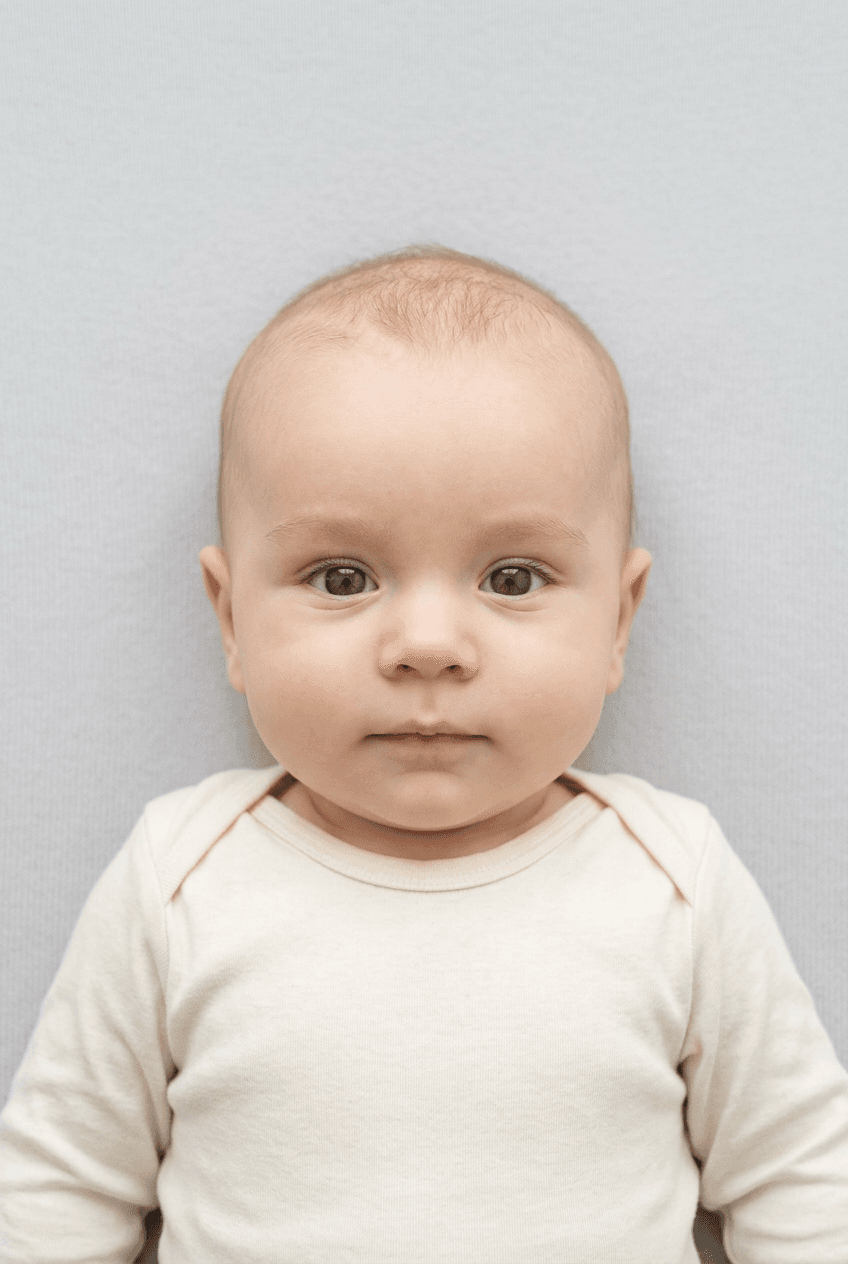
Assuming any generic Schengen-compliant photograph will work for a German passport is a fast track to a rejected application. Germany enforces a distinct biometric template, defined by the Federal Printing Office (Bundesdruckerei), which holds tolerances significantly tighter than baseline international standards. A minor head tilt or a subtle shadow dropping across the jawline will invalidate the submission, forcing a restart of the entire application process. Meeting german passport photo requirements demands precise alignment within an invisible biometric grid, not just a plain background and a neutral expression. Whether you are renewing from within the UK or submitting a first-time visa application, understanding these strict structural boundaries determines whether your document is printed or bounced back.
Quick Summary
German travel documentation demands a 35x45mm biometric image that strictly maps the applicant's facial features to an official overlay grid. The face must occupy 70 to 80 percent of the frame, captured under uniform lighting against a light grey background, with distinct allowances applied solely for infants and young children.
- Dimensions must sit exactly at 35mm wide by 45mm high.
- Face height from chin to crown must measure between 32mm and 36mm.
- Backgrounds must be uniform, untextured, and provide high contrast without being pure white.
- Glasses are permitted only if frames do not obscure the eyes and lenses show zero reflection.
- Children under five are exempt from neutral expression and looking-straight-ahead requirements.
Table of Contents
- Why generic EU dimensions fall short of German standards
- Where lighting errors trigger automatic rejection
- How infant exemptions change the baseline rules
- What distorts first when shooting at home
- Comparing validation methods for biometric compliance
Why generic EU dimensions fall short of German standards
The German government utilises a specific photo sample board, known as the Fotomustertafel, to determine whether an image is suitable for digitisation. While many countries simply request that the face is centred, the German biometric system applies a rigid grid over the submitted image. The total print size must be 35mm by 45mm without any borders. Inside that frame, the distance from the bottom of the chin to the top of the head (excluding hair volume) must fall between 32mm and 36mm. If the face occupies less than 70 percent or more than 80 percent of the frame, the facial recognition software used at border control cannot accurately map the distance between key biometric markers, leading to an automatic rejection of the photograph.
The vertical positioning matrix
The positioning of the eyes is just as critical as the overall face height. The German matrix dictates that the eyes must sit between 28mm and 32mm from the bottom edge of the photo. This creates a highly specific zone where the applicant's gaze must align. If the head is tilted back slightly to correct a double chin, or angled down, the eye-line drops out of the target zone. The head must be perfectly straight, addressing the camera lens directly without looking over a shoulder or tilting to either side.
Practical rule: Measure the face from the bottom of the chin to the top of the skull; if it falls outside the 32-36mm range, or if the eyes do not rest in the upper middle third of the photograph, the image will be rejected regardless of its clarity.
Background contrast rules
A common failure point is the background colour. While many generic guidelines suggest a pure white background, the German authorities strongly recommend a medium to light grey background. The biometric software relies on sharp edge detection to isolate the shape of the jaw and the crown of the head. A pure white background often washes out fair skin tones and blond or white hair, merging the applicant with the background. Conversely, a black or heavily shadowed background obscures dark hair. The background must also be entirely uniform - no textures, patterns, doorways, or curtains can be visible.
Where lighting errors trigger automatic rejection
A beautifully composed german passport photo will still fail if the lighting setup introduces digital noise or shadows. The algorithms used by the Bundesdruckerei require a flat, evenly illuminated face to map the topography of the applicant's features. Shadows alter the perceived shape of the face in a two-dimensional image. If a strong light source comes from one side, it casts a shadow from the nose across the cheek, which the software interprets as an asymmetrical facial structure.
Eliminating facial and background shadows
Overhead lighting typically casts harsh shadows under the eyes and chin, while flash photography placed directly on the camera throws a sharp, dark drop-shadow onto the background directly behind the head. Both are grounds for immediate rejection. The subject must be lit evenly from both sides, filling in any natural shadows. Furthermore, the background itself must be evenly lit to prevent a gradient effect where one side of the image is visibly darker than the other.
The spectacle and reflection trap
Applicants who wear glasses face an exceptionally high rejection rate. The frames must not cover any part of the eye, particularly the iris or pupil, and thick frames are generally discouraged as they disrupt the structural mapping of the eye socket. More commonly, lighting reflects off the lenses, creating a white glare that obscures the eye entirely. Similarly, oily skin or harsh lighting can cause heavy reflections on the forehead or cheeks. While some applicants attempt to fix these glare issues using software, any digital alteration or pixel manipulation - including red-eye removal tools - invalidates the image entirely. If you encounter consistent glare on glasses, it is far safer to remove them for the photograph.
How infant exemptions change the baseline rules
The strict biometric requirements applied to adults are physically impossible to enforce on young children. The German government acknowledges this and has published modified rules for applicants under the age of ten, with particularly relaxed tolerances for infants and toddlers. Understanding these exceptions is crucial when generating compliant baby passport photos from home, as forcing an infant to meet adult standards often results in an unnatural, unusable image.
Relaxed criteria for children under five
For children up to their fifth birthday, the rules regarding expression and posture are significantly relaxed. The child does not need to maintain a neutral expression, and they do not need to look directly into the camera lens with perfectly straight alignment. Minor head tilts are permitted, and the face height requirement is widened. Instead of the rigid 32-36mm rule, a child's face may measure anywhere from 22mm to 36mm (occupying 50 to 80 percent of the frame). The eye position rule is also abandoned, though the face must remain fully visible and roughly centred.
Newborn and infant support mechanisms
Infants under one year old receive the widest exemptions. They are permitted to have their eyes closed, though open eyes are preferred. The primary challenge when photographing a newborn is supporting their head without introducing foreign objects into the frame. The strictest rule that remains in place is that no other person or supporting object can be visible. You cannot hold the child up if your hands, arms, or clothing appear in the crop.
Practical rule: Lay the infant flat on a plain light grey blanket or sheet to photograph them from above; this naturally supports their head while keeping hands, car seats, and patterned clothing out of the background.
Reviewing international baby passport photo guides before starting will clarify exactly how to position the camera above the child to prevent casting your own shadow over their face, a common error when shooting from above.
What distorts first when shooting at home
Modern smartphones possess high enough resolution to capture biometric documentation, but the default hardware settings often warp the image. The failure mode here is not resolution, but focal length. Standard smartphone cameras default to a wide-angle lens. When held at arm's length (selfie distance), a wide-angle lens introduces barrel distortion. This stretches the centre of the image, causing the nose to appear bulbous and pushing the ears back so they are no longer visible.
Lens compression and facial proportions
To capture a face accurately, you must mimic the compression of a portrait lens. The camera must be placed at least 1.5 metres away from the applicant. At this distance, the facial proportions are captured as they appear in reality. Because the applicant will appear quite small in the frame at 1.5 metres, you must use the camera's optical zoom (usually 2x or 3x) to fill the frame, or crop the image later. Standing too close alters the biometric markers the software uses to verify identity, making the digital face differ mathematically from the physical face presented at the border checkpoint.
Resolution and printing artifacts
The physical print must be rendered at a minimum of 600 dots per inch (DPI) on high-quality photographic paper. If the file is compressed - a common occurrence if the photograph is transferred from the photographer to the applicant via messaging apps like WhatsApp or iMessage - the DPI degrades drastically. When printed, this compression manifests as pixelation or blurriness around the eyes and hair edges. The image must be perfectly sharp, with continuous tone and no visible dot patterns from low-quality home inkjet printers.
Comparing validation methods for biometric compliance
Meeting germany passport photo requirements demands more than a good eye; it requires mathematical precision. Applicants generally have three routes for producing these images, each carrying different failure rates and validation methods.
| Validation Method | Precision Level | Common Failure Modes | Best Suited For |
|---|---|---|---|
| AI-Powered Platforms | High (Maps 20+ biometric markers) | User error in initial capture (distance/lighting) | Infants, applicants unable to travel, strict biometric checking |
| Retail Photo Kiosks | Medium (Manual alignment overlay) | Incorrect background contrast, poor seated posture | Quick physical prints for standard adult applications |
| Traditional Studios | High (Controlled lighting/lenses) | Human error regarding specific foreign country rules | Applicants requiring complex lighting correction |
Retail kiosks often rely on a generic oval overlay on a screen, which works well enough for domestic UK standards but frequently fails the tighter German face-height tolerances. Traditional studios offer excellent lighting and eliminate lens distortion, but the photographer must manually verify the measurements against the Fotomustertafel.
Digital validation systems evaluate the raw image against the specific biometric matrix before generating a file. However, these systems require a base photograph that meets the lighting and distance rules outlined above. If the source image is severely distorted by shadows or close-range photography, the validation will flag it. For users attempting this route, consulting biometric troubleshooting resources can resolve most lighting and distance errors before the final image is locked in. Always verify the digital formatting terms of your chosen service to ensure they guarantee compliance with Schengen and German specific criteria rather than generic passport standards.
FAQ
Can I smile in a German passport photo? No. Adults and children over five must maintain a strictly neutral expression with their mouth completely closed. Smiling alters the shape of the cheeks and eyes, which disrupts facial recognition software.
Can I wear makeup for a German visa application? Yes, light, natural makeup is permitted. However, heavy contouring, excessive highlighter that reflects light, or makeup that significantly alters your natural skin tone or facial structure will lead to rejection.
What happens if my photo is rejected? If the application centre or the Bundesdruckerei rejects your photograph, your application process halts immediately. You will be required to submit a new, compliant photograph before the processing of your passport or visa can resume.
Can a baby be asleep in a German passport photo? Yes, infants under one year old are permitted to have their eyes closed in the photograph, though authorities prefer open eyes if possible. The child's face must still be fully visible and clear of any hands or supports.
How recent must the photograph be? The photograph must have been taken within the last six months and must accurately reflect your current appearance. Significant changes in weight, facial trauma, or drastic hair alterations may require a newer photograph.