Understanding Passport Photo Clothing Requirements for Biometric Compliance
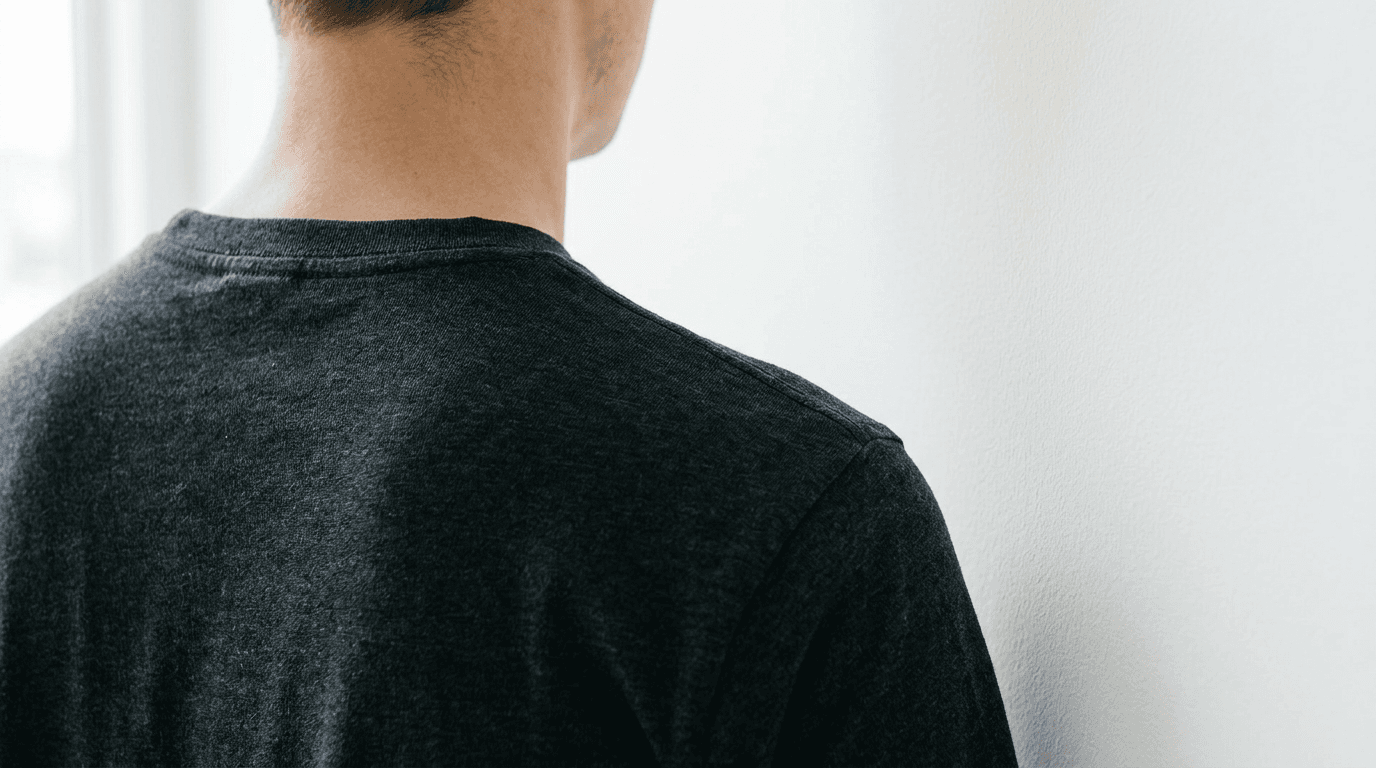
Most parents spend half an hour coaxing an infant to look straight at a lens, only to have the application rejected because the child was wearing a white bodysuit. When clothing matches the mandatory light background, the automated systems used to verify a biometric passport photo cannot locate the physical boundary of the applicant's shoulders. The system assumes the head is floating, the edge-detection algorithm fails, and the passport photo clothing requirements are breached before a human examiner even sees the file.
Quick Summary
Biometric compliance relies heavily on high contrast between the applicant's clothing, their jawline, and the mandated background colour to allow software to map facial geometry accurately.
- Garments must contrast sharply with the background to allow edge-detection software to identify shoulder width.
- High collars, hoodies, and bulky scarves routinely fail applications by obscuring the critical chin-to-neck transition.
- Infants require flat, collarless clothing that does not bunch up around the jawline when they recline.
- Uniforms, camouflage, and novelty attire are strictly prohibited in international travel documentation.
Table of Contents
- Why attire triggers biometric rejection
- The contrast rule: Backgrounds versus garments
- Necklines and facial mapping requirements
- Headwear and religious exemptions
- Infant-specific clothing complications
- Uniforms and prohibited patterns
- Comparison Table: Infant Garment Selection
- FAQ
- Recommended Reads
Why attire triggers biometric rejection
Modern border control relies on automated facial recognition software to verify identity. When you submit an image, a government system scans it to identify specific biometric markers, mapping the distance between the eyes, the tip of the nose, the corners of the mouth, and the distinct curve of the jaw. Clothing choices directly interfere with this digital mapping process when they cast unpredictable shadows, obscure structural facial features, or confuse the background separation algorithms.
Edge detection is the primary mechanism at work here. Before the software maps the face, it isolates the subject from the background. It does this by looking for a sharp shift in pixel values - a dark shirt against a light background creates a clean mathematical line. If the algorithm cannot find the shoulders because a pale top blends into a pale wall, the image processing halts. The system cannot confirm the applicant's physical dimensions or proper framing.
Shadow occlusion is the second mechanism. Bulky clothing creates three-dimensional terrain around the neck and chin. Studio lighting or flash photography striking a thick collar will cast deep, irregular shadows upward across the lower jaw. To the algorithm, these shadows read as structural facial features, artificially altering the measured shape of the applicant's chin and leading to immediate rejection.
Practical rule: If you squint at the photograph and cannot easily distinguish where the subject's shoulder ends and the background begins, the border agency's edge-detection software will also fail to find it.
The contrast rule: Backgrounds versus garments
Government agencies globally standardise their background requirements, but these requirements vary by jurisdiction. The United States demands a stark white background, while the United Kingdom and much of the European Union mandate a light grey or cream background. This regional variation determines exactly which garments will cause an application to fail.
The most common error applicants make is wearing white clothing for a US application or pale grey clothing for a UK application. The lack of contrast destroys the silhouette. You must select clothing that stands out vividly against the specific background required by the issuing authority. Darker, solid colours like navy, black, deep green, or maroon reliably produce the stark contrast required by biometric parsing engines.
Patterns introduce a different risk. While minor patterns are generally accepted, high-contrast, dense geometric patterns - such as tight houndstooth, narrow stripes, or checkerboards - can create a moiré effect when the image is digitally compressed or printed on secure passport paper. This optical distortion confuses scanning hardware at electronic passport gates. Solid blocks of dark colour eliminate this risk entirely, ensuring the digital file compresses cleanly without creating false artefacts.
To understand exactly which background colour your specific application requires before choosing your outfit, consult UK & International Baby Passport Photo Requirements & Guides, which breaks down the specific technical parameters by country.
Necklines and facial mapping requirements
The jawline is a critical biometric anchor point. The transition from the chin to the neck allows facial recognition software to establish the vertical axis of the face. Clothing that encroaches on this space disrupts the entire measurement grid.

Turtlenecks, high-collared shirts, and thick scarves physically cover the lower jaw. Even if the actual bone structure is slightly visible, the fabric creates a false edge that the software interprets as the bottom of the face. This shortens the recorded facial height, which means the resulting biometric template will not match the applicant's actual face when scanned at a border crossing.
Hoodies present a dual threat. When worn down, the thick fabric bunches heavily around the back and sides of the neck, altering the natural silhouette of the head and shoulders. Furthermore, the material often pushes the applicant's hair forward, casting secondary shadows over the cheekbones. V-neck or crew-neck shirts are optimal because they leave the neck entirely exposed, providing the algorithm with an uninterrupted view of the chin, jawline, and collarbones.
For applicants with longer hair, high necklines often force hair to puff outward or drape unpredictably around the face. A flat, low neckline allows hair to sit naturally behind the shoulders, keeping the facial oval completely clear of obstruction.
Headwear and religious exemptions
Standard travel document regulations strictly forbid head coverings, hats, headbands, and large hair accessories. The primary reason is that headwear alters the apparent size and shape of the skull, covering the crown - the top of the head - which is a required measurement point for establishing the overall height of the face.
Exceptions are universally made for head coverings worn daily for religious or medical purposes, but these exemptions come with rigid technical constraints. The face must remain entirely visible from the bottom of the chin to the top of the forehead, and both edges of the face must be clear.
When wearing a hijab, turban, or other religious headwear, the primary failure mode is shadow casting. If the fabric protrudes too far forward over the forehead or cheeks, overhead lighting will cast deep shadows onto the face, masking the true depth of the eye sockets or the width of the cheekbones. The head covering must be pulled back tightly enough to reveal the entire facial oval and secured so that it sits flush against the skin without creating overhangs.
Additionally, the colour of the headwear matters. Just like standard clothing, white or pale grey head coverings risk blending into the mandatory light background. A darker head covering provides the necessary contrast to allow the software to delineate the shape of the applicant's head against the wall behind them.
Infant-specific clothing complications
Photographing newborns and infants introduces unique physical constraints that directly impact clothing choices. Because young infants cannot support their own heads, they are typically photographed lying on their backs on a light-coloured blanket or seated in a carefully draped car seat.
When a baby lies down, clothing shifts upward. A standard collared shirt or a winter coat that looks fine when the child is upright will immediately bunch around their ears and chin when they recline. This bunching completely obscures the infant's jawline, leading to instant failure. Furthermore, bulky clothing makes it difficult for parents to correctly position the child's arms, often resulting in hands or fabric straying into the facial area.
Parents must also account for pacifier clips, large bibs, and decorative bows. Government agencies treat these items as prohibited accessories because they obscure the chest and neck, and metallic clips can cause flash glare. The optimal garment for an infant passport photograph is a simple, dark-coloured, flat-necked bodysuit or vest.
Practical rule: Dress infants in dark, collarless bodysuits that fit snugly; loose fabric will inevitably ride up over the jawline when the child is laid flat on a background sheet.
If you are struggling to position your baby securely without hands or bulky clothing ruining the shot, reviewing the specific infant posing techniques in the Help Center | UK Baby Passport Photo Maker provides actionable methods for maintaining clear facial visibility.
Uniforms and prohibited patterns
Travel documents are strictly civilian identification documents. Almost all international passport authorities explicitly forbid the wearing of uniforms in passport photographs. This rule applies to military uniforms, police uniforms, flight attendant attire, and any clothing that resembles an official uniform.
The mechanism behind this restriction is neutrality. A passport establishes personal identity, not professional or rank-based status. Including a uniform introduces extraneous organizational markers that are irrelevant to the biometric data and may cause confusion or bias at international borders.
Similarly, camouflage patterns are routinely rejected. While not always explicitly banned as a "uniform" if it is civilian fashion, camouflage disrupts edge detection algorithms and is heavily associated with military apparel, causing human examiners to reject the image on uniform grounds. School uniforms present a grey area; while standard jumpers or blazers are often accepted for children, garments displaying prominent school crests or military-style academy braiding are frequently flagged. To avoid delays, children should wear standard casual clothing rather than their school attire.
Comparison Table: Infant Garment Selection
| Garment Feature | Biometric Impact | Recommended Action |
|---|---|---|
| White / Pale Bodysuits | Fails edge detection against standard light backgrounds. Shoulders disappear. | Select dark blue, green, or black garments for sharp background contrast. |
| High Collars / Polo Shirts | Bunches around the neck when infant reclines, hiding the jawline. | Use flat, crew-neck or scoop-neck vests that leave the neck fully exposed. |
| Winter Coats / Hoodies | Alters head silhouette and pushes fabric into the facial oval. | Remove outerwear entirely. Photograph in a simple indoor base layer. |
| Patterned/Text-heavy tops | High-contrast patterns cause digital moiré effects during scanning. | Stick to solid colours without large logos, text, or complex geometries. |
| Hair bows and headbands | Obscures the crown of the head and alters cranial measurements. | Remove all hair accessories, clips, and decorative headbands. |
FAQ
Do passport photo qualifications require a specific type of shirt?
No specific style of shirt is legally required, but a plain, dark-coloured, collarless shirt is technically optimal. It ensures high contrast against light backgrounds and keeps the jawline visible for biometric mapping.
Can I wear a white shirt if the background is light grey?
A white shirt against a light grey background can sometimes pass human inspection, but it frequently fails automated edge-detection algorithms due to low contrast. It is significantly safer to wear a darker colour to ensure a clear shoulder outline.
Are babies allowed to wear bibs in their passport photos?
No. Bibs obscure the neckline and chest, and often feature patterns or text that disrupt the image processing. Infants should be photographed in standard, plain clothing without any feeding accessories.
Can I wear my glasses if they have clear frames?
In most jurisdictions, including the UK and the US, glasses are entirely prohibited regardless of frame colour or thickness. Even clear frames cause glass reflections, flash glare, and cast shadows over the eye sockets, which ruins biometric mapping.
What happens if my clothing violates the requirements?
The application will be rejected, either instantly by automated scanning software or later by a human examiner. You will be required to submit a new photograph, which will delay the issuance of your travel document.